
The U.S.S. Maine Explodes, Killing 260 Officers and Crew: February 15, 1898
- Catholic Textbook Project

- Feb 16
- 2 min read
This text comes from our book, The American Venture.
The cause of the Cuban rebels was generally popular in the United States, and some Americans favored U.S. intervention in their favor. The publishers William Randolph Hearst and Joseph Pulitzer, though running rival newspapers, were united in promoting American entrance into the Cuban war. Despite President McKinley’s own reservations, his cabinet members divided over the question of war, with the assistant secretary of the navy, Theodore Roosevelt of New York, positively hot for it. A great nation, said Roosevelt, should seek “honor and renown” in war.

Whether great nations should seek war or not, many argued that there were good grounds to avoid this war. For one, though the United States had fought foreign powers, even for conquest, it had never in its history intervened in wars between foreign powers, like between Cuba and Spain. Then it appeared that things might be settling down in Cuba. The Spanish were releasing Cubans from camps and offering the island a measure of home rule. The worst abuses, it seemed, had been abolished.
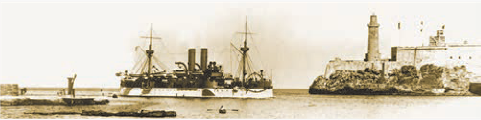
Yet, reasons of this sort did not stop Pulitzer and Hearst, along with pro-rebel Cuban exiles in America and Fitzhugh Lee, the American consul to Havana, from calling for war. Fearing a collapse of Spanish power could endanger American citizens in Havana, Lee asked that the battleship Maine be dispatched to Havana harbor. Yet, though this was technically an act of war, Spain, fearing conflict with the United States, studiously ignored it.
Then, on February 15, 1898, the Maine exploded, killing 260 officers and crew. Stung to anger by the explosion—and goaded by Pulitzer and Hearst—the American public blamed Spain, though there was no proof the Spanish government was at all responsible. (It could just as easily have been the rebels.) Soon, the public was crying, “Remember the Maine!” and even reluctant Republicans, fearing they would lose control of Congress in the election of 1898 if they did not act, took heed. Though a naval court investigating the explosion provided no evidence of Spain’s guilt, most Americans were convinced she was responsible and demanded war. Though still favoring peace, McKinley now thought he had no choice but to call for war.
On April 11, 1898, McKinley asked for a declaration of war, but Congress hesitated. Instead, by April 22, both the House of Representatives and the Senate were calling on Spain to grant Cuba its independence. It was then that McKinley took the decisive step. He ordered the blockade of all Cuban ports—an act of war that Spain thought she could not ignore. On April 24, Spain declared war on the United States, and, the next day, the United States declared war on Spain. America’s demand was unequivocal: the Spanish government, said McKinley, must “relinquish its authority and government in the Island of Cuba and withdraw its land and naval forces from Cuba and Cuban waters.”
In this way, the United States entered a war that many Americans seemed to think was something of a lark. Their sentiment was perhaps best expressed by McKinley’s secretary of state, John Hay. A “splendid little war,” Hay called it.


